
What happened to Holland Village?
What Happened to Holland Village?
For years, Holland Village was known as Singapore’s laid-back, bohemian pocket – a mix of shophouse bars, indie cafés and expat hangouts. Recently, though, many Singaporeans have been asking: “What happened to Holland V?” Some of the old charm seems to have faded, replaced by new developments and changing crowds.
Holland Village hasn’t “died” – it has evolved. But in that evolution, some of its original character has been lost, while new layers of retail, residential and office space are still finding their rhythm.
1. The Holland Village Many Remember
For a long time, Holland Village meant:
- Open-air bars along Lorong Mambong
- Family-run shops and provision stores
- Indie cafés and ice-cream spots
- A strong expat community and late-night crowd
Rents were more manageable, concepts were more experimental, and the vibe was “messy but alive”. It felt less like a shopping mall – and more like a village.
2. What Changed on the Ground?
Over time, several forces reshaped Holland Village:
- Rising rentals pushed out smaller, older businesses.
- Land use intensification brought in new mixed-use developments.
- Shifting consumer habits – more malls, more online shopping, more suburban hubs.
- Covid-era restrictions hit F&B-heavy streets particularly hard.
The result? More empty or boarded shops at certain stretches, fewer legacy tenants, and a noticeable change in the “feel” of the place.
3. The Rise of One Holland Village & New Projects
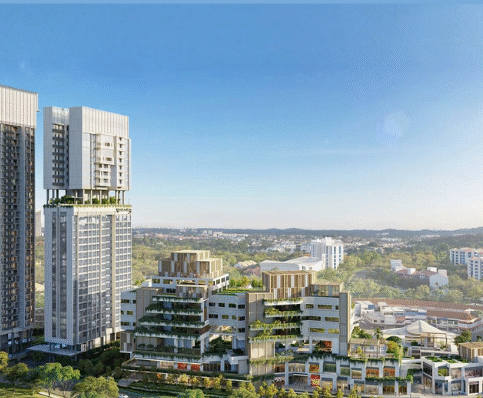
A key turning point was the development of One Holland Village and nearby new launches. These projects brought:
- New residential units with premium pricing
- Curated retail concepts and F&B
- Office components and more structured open spaces
- A more “designed” experience – greenery, plazas, seating areas
This injected new life, but also shifted the centre of gravity. Some footfall migrated from the older, grittier streets to the newer, airier spaces.
4. Has Holland Village Lost Its Soul?
It depends who you ask:
- Long-time visitors miss the old, slightly chaotic nightlife and quirky shops.
- New residents appreciate cleaner streets, safer walkways and curated brands.
- Older businesses feel squeezed by higher costs and competition.
In reality, Holland V is now a hybrid: part heritage shophouse strip, part modern mixed-use precinct still settling into its new identity.
5. What This Means for Property Owners & Investors
Residential
- City-fringe location and MRT access remain strong fundamentals.
- Newer condos and integrated developments are likely to see stable demand.
- Older walk-up stock may hold value through scarcity and charm, but tenant profile may shift.
Retail & F&B
- Concepts now need to be more differentiated to stand out.
- “Just another café/bar” may struggle without a unique hook.
- Daytime trade (brunch, families, remote work crowd) is increasingly important.
Shophouses
- Still viewed as trophy assets, but yield may compress.
- Success depends heavily on micro-location, frontage and tenant mix.
6. Is There Still Opportunity in Holland Village?
Yes – but it’s more selective than before. Today’s opportunity is not about “the old Holland V” nostalgia, but about:
- Positioning within the wider Holland-Buona Vista-Queenstown corridor,
- Choosing projects that benefit from the new critical mass of residents & offices,
- Aligning with the updated demographic – young professionals, families, overseas returnees.
The winners will be those who understand where the new movement patterns and spending flows go – not just where the old memories used to be.
TopBroker Insight
Holland Village didn’t simply “go downhill”. It went through gentrification, consolidation and reinvention. In that process, it lost some of its indie soul, but gained new infrastructure, housing and curated spaces.
For buyers and investors, the key is to treat Holland V as a renewed mixed-use node, not just a nostalgic nightlife spot – and to select assets that work in that new reality.