

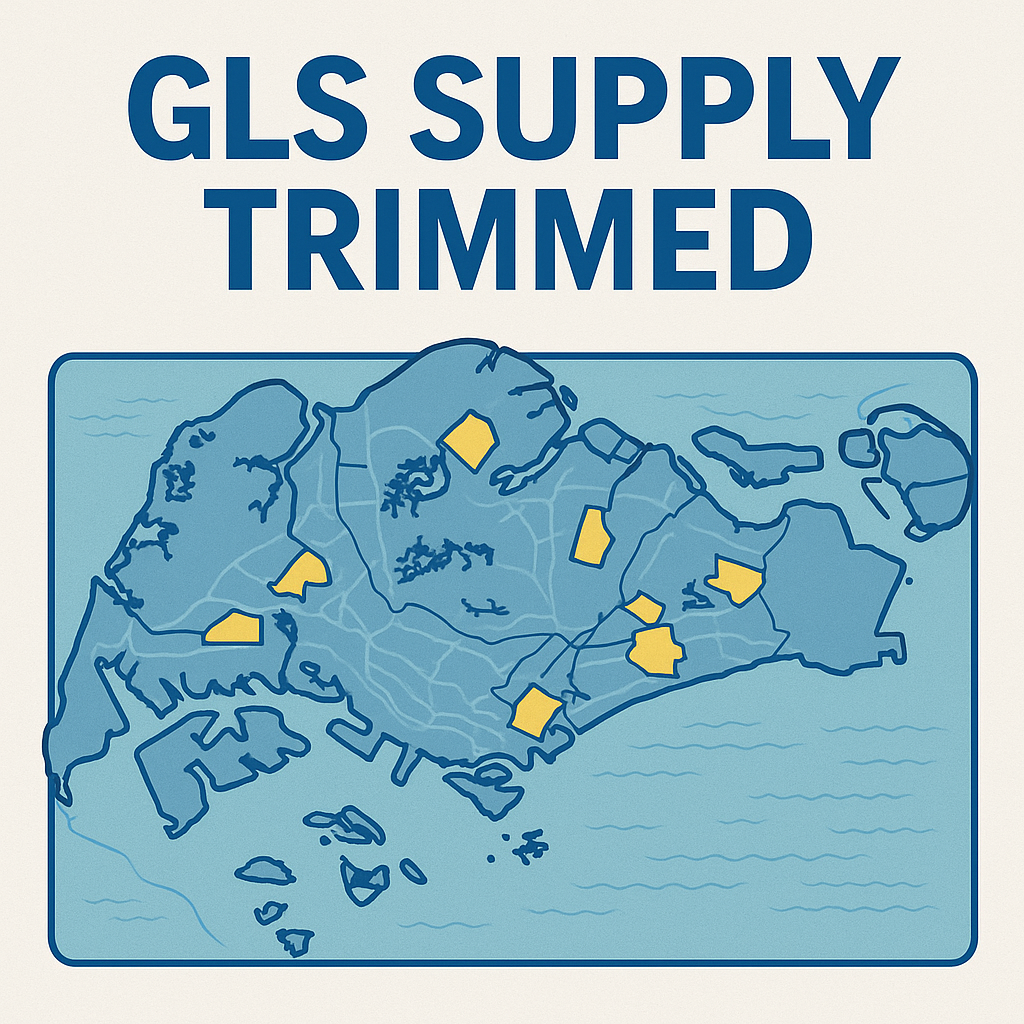
Previous Government Land Sales vs Current Government Land Sales – What It Means for Buyers & Developers
GLS Supply: Previous vs Current (Trimmed) Confirmed List
Comparison Chart
The Government has trimmed private housing land supply on the Confirmed List.
Here’s a simple side-by-side view of what has changed — and what it means for buyers and developers.
| Aspect | Previous GLS Confirmed List (Higher Supply Phase) | Current GLS Confirmed List (Trimmed Supply) |
|---|---|---|
| Overall Land Supply | More sites released to meet strong demand and catch-up from earlier undersupply. | Fewer sites as demand moderates and inventory remains healthy. |
| Policy Objective | Cool rapid price growth and prevent shortage of new homes. | Avoid oversupply, stabilise prices and support a soft-landing. |
| Developer Behaviour | More selective bidding but with more choices across locations. | More focused bidding on fewer sites; competition may increase for well-located plots. |
| Launch Pipeline | Larger wave of future launches across multiple regions. | More calibrated pipeline; fewer launches but potentially better spaced-out. |
| Price Pressure (New Launches) | High land bids in some tenders translated into higher launch prices. | Land price discipline may improve; supports a more stable pricing environment. |
| Risk of Oversupply | Higher risk if demand weakens suddenly. | Lower risk as supply is tightened in advance. |
| Buyer Implications | More choices but also more price volatility between projects. | Fewer new options, but better alignment between demand and supply. |
| Investor Implications | More opportunities, but careful selection needed to avoid over-supplied pockets. | Stock of new units grows at a more sustainable pace; project selection still critical. |
| Long-Term Market Health | Depends on how quickly demand absorbs the extra supply. | More balanced — reduces extreme swings in future prices and vacancy. |