

Food Factory for Sale in Singapore – B1 & B2 Buyer Guide
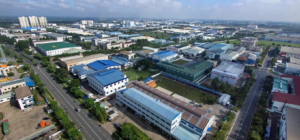
Buying a food factory in Singapore isn’t the same as buying a “normal” industrial unit. The right unit can unlock long-term operational certainty (and sometimes better resale demand), but the wrong unit can get stuck at the approvals stage or become expensive to retrofit.
What Is a Food Factory in Singapore?
A “food factory” typically refers to an industrial unit used for food production, processing, central kitchen operations, packaging, or related supply-chain functions. In practice, suitability depends on zoning, allowed use, and whether the unit’s M&E setup supports your operations.
- Common uses: central kitchen, bakery production, ready-to-eat processing, cold prep, packaging.
- Key differentiator: your approvals + fit-out path is often more complex than standard industrial use.
- Best outcomes: when the unit is designed for food workflows (loading → prep → cook → pack → dispatch).
B1 vs B2 Zoning: What Buyers Must Know
In Singapore, industrial properties are commonly classified as B1 or B2. This impacts the type of industrial activity allowed and can affect your operational requirements. If you’re unsure which zoning you need, a practical way is to map your process: heat / exhaust / odour / power load / heavy vehicle movements / storage needs.
| Factor | B1 (Cleaner / Light) | B2 (Heavier / General) |
|---|---|---|
| Typical positioning | Cleaner, lighter industrial uses; more “business park-ish” standards in some estates | Heavier industrial activities; better tolerance for intensive operations |
| Food ops fit | Often works for cleaner food production setups, subject to unit specs & approvals | Often preferred where higher intensity, stronger exhaust, heavier loading is needed |
| Buyer tip | Check loading access + exhaust routing early to avoid expensive redesign | Still confirm neighbours/estate restrictions; don’t assume “anything goes” |
Who Should Buy a Food Factory?
Owner-Operators
- Want stability vs rental renewals
- Need control over workflow layout & equipment
- Prefer long-term cost certainty
Investors
- Seek tenant demand from food operators
- Prefer units with “food-ready” features
- Value assets with strong resale liquidity in niche segment
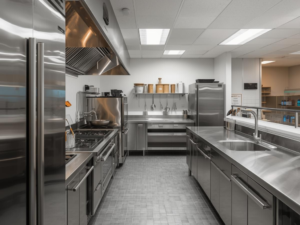
Typical Prices & Costs to Expect
Food factories can command premiums when they are “ready” (or easier) for food operations. The real cost is not just the purchase price — it’s also the fit-out and compliance journey.
- Fit-out cost drivers: power upgrades, exhaust & duct routing, floor traps, grease management, ventilation, cold rooms.
- Time cost: approval timelines + contractor scheduling + testing/commissioning.
- Resale appeal: units with good loading, proper drainage, and clean exhaust paths are easier to transact.
Buyer Checklist (Use This Before You View)
- Zoning & allowed use: confirm B1/B2 and whether your intended activity fits.
- Loading & access: vehicle height/turning, dock access, ramp-up vs cargo lift, loading bay practicality.
- Power & M&E: available power capacity, exhaust feasibility, fresh air needs, ventilation strategy.
- Water & drainage: floor traps, grease management plan, wash areas, discharge considerations.
- Layout reality: workflow efficiency (raw → prep → cook → pack → dispatch), staff flow, hygiene separation.
- Capex planning: shortlist a fit-out range early to avoid overpaying for the wrong shell.
Available Food Factory Listings (Choose One)

FAQ (Food Factory Singapore)
Do I need B2 to run a food factory?
Not always. It depends on your operation intensity and unit-level constraints. If you need heavier loading, stronger exhaust/odour control, or higher power load, B2 is often the safer shortlist — but you still need to confirm the specific unit’s feasibility.
What is the biggest mistake buyers make?
Buying based on price/size only, then discovering later that exhaust routing, power upgrades, drainage layout or access constraints make the unit expensive (or slow) to operationalise.
Should I buy a “food-ready” unit or retrofit a shell?
If your timeline is tight, food-ready units can reduce friction. If you have strong contractors and time, retrofitting can work — but budget properly for M&E and compliance-related works.