

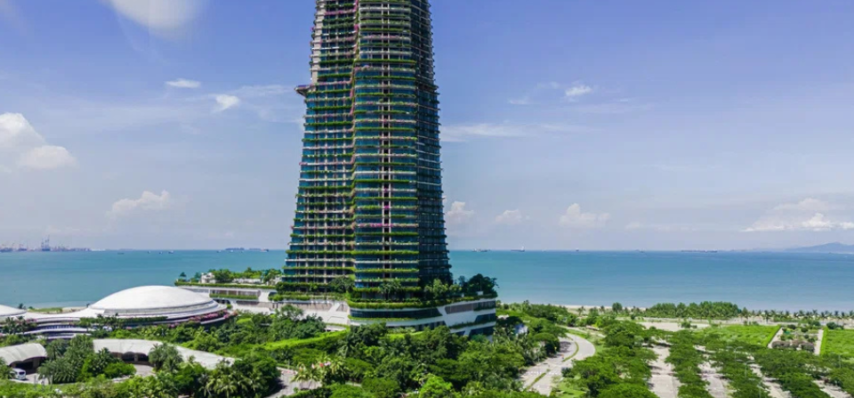
From ghost town to potential wealth magnet: 6 family offices get green light to operate in Forest City
TopBroker News Cuttings • Johor-Singapore SEZ
From ghost town to potential wealth magnet: 6 family offices get green light to operate in Forest City
6 SFOs conditional approval
~RM400m indicative AUM
Pilot phase ecosystem build
SEZ narrative shift
What happened
Forest City in Johor Bahru — long labelled a “ghost town” mega-development — is seeing a small but visible uptick in activity, as Malaysia pushes to give the zone a new economic purpose through finance-led incentives.
The key development: six families have reportedly obtained conditional approval to establish a presence in the Forest City Special Financial Zone under the Single Family Office (SFO) Incentive Scheme, with around RM400 million in indicative assets under management.
On-the-ground signals: A growing mix of eateries and a transport hub with bus links (including to Tuas, Singapore)
are cited as early signs of renewed activity — even as foot traffic remains light in many parts of the development.
Why this matters
Narrative shift
From residential-led “cautionary tale” to finance-led “special zone” positioning.
Economic purpose
Family offices are meant to seed professional services, talent, and ecosystem activities.
But: scale question
Market observers still question whether a handful of SFOs can generate enough activity to truly revitalise the township.
Pilot phase
The initiative is framed as early-stage; the proof is whether incentives translate into sustained “real economy” momentum.
Bottom line: Incentives can attract interest, but long-term success depends on ecosystem depth (talent, governance clarity,
lifestyle amenities, connectivity, and credible institutional participation).
TopBroker Take: what to watch if you’re tracking the Johor-Singapore SEZ
- Follow the “ecosystem build”, not just the headlines: office occupiers, service firms, education/health nodes, and steady population inflows matter more than announcements.
- Connectivity is a real-world constraint: transport links (and travel friction) will heavily shape whether professionals actually base themselves there.
- Spillover zones may move first: logistics corridors, industrial clusters, and cross-border business parks can see earlier demand than high-end residential.
- Policy clarity wins: investors look for clear eligibility rules, substance requirements, and credible enforcement.
What to watch next
- More approvals & AUM scale-up: whether the pipeline grows beyond the initial six approvals.
- Talent & substance indicators: actual hiring, office take-up, service firm setups, and repeatable ecosystem events.
- Policy details: how the tax incentive period, eligibility thresholds, and substance requirements are implemented in practice.
- SEZ spillover: demand shifts in nearby industrial/logistics nodes tied to cross-border trade and supply chains.