

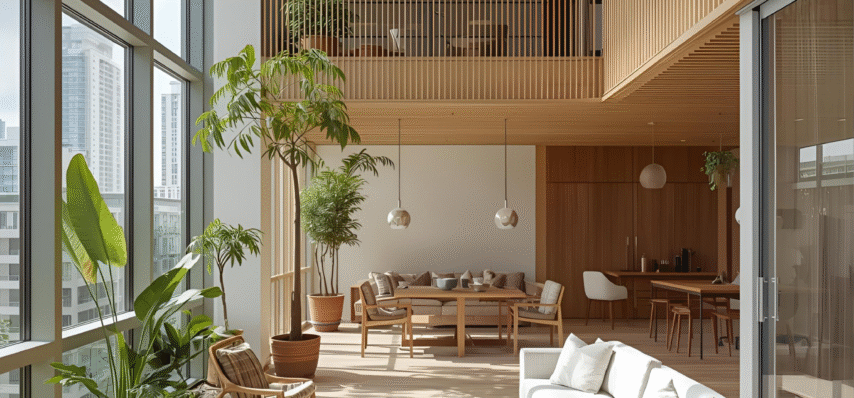
Co-Living Spaces in Singapore: The Future of Urban Rental Living (2025)
- November 9, 2025
- Analysis
- 7 mins read
Co-Living Spaces in Singapore: The Future of Urban Rental Living (2025)
Co-living spaces have emerged as a stylish, flexible and community-driven alternative to traditional rentals.
Here’s how co-living is reshaping urban rental living in Singapore in 2025.
1. What Is Co-Living and How Does It Work?
Co-living is a modern housing concept where residents rent a fully furnished private room, while sharing common spaces such as the kitchen, living area and sometimes work zones.
Most co-living operators offer:
- Fully furnished rooms with bed, wardrobe and desk
- Shared kitchen, lounge and sometimes gym or co-working areas
- All-inclusive rent (utilities, Wi-Fi, cleaning)
- Flexible lease terms from 3–12 months
2. Who Is Co-Living Best Suited For?
In Singapore, co-living attracts:
- Young professionals working in CBD or city fringe
- Single expats on medium-term assignments
- Remote workers and digital nomads
- Locals between life stages (e.g. post-breakup, waiting for BTO)
It’s popular among tenants who prioritise location, design and convenience over large private floor area.
3. Co-Living vs Traditional Rental: Key Differences
Compared to renting a whole HDB or condo unit, co-living typically offers:
- Lower upfront costs – no furniture, renovation or big deposits
- Shorter commitment – flexible leases instead of strict 1–2 year contracts
- All-in pricing – Wi-Fi, utilities and cleaning often included
- Community – events, networking and shared spaces
The trade-off: less privacy and smaller personal space compared to renting your own unit.
4. Why Co-Living Is Growing in 2025
Several trends are pushing co-living forward in Singapore:
- Rising rental prices for entire units
- More flexible working patterns (hybrid and remote)
- Demand from mobile professionals and expats
- Preference for “plug-and-play” living — just bring your suitcase
5. Typical Features of Modern Co-Living Spaces
Today’s co-living developments look more like boutique hotels or lifestyle clubs. Common features include:
- Stylish interior design with Instagrammable common areas
- High-speed Wi-Fi and co-working corners
- Weekly cleaning of common spaces (sometimes rooms too)
- Security access systems and CCTV
- Community events: dinners, workshops, social nights
6. Pros of Co-Living in Singapore
For tenants:
- Turnkey living experience — minimal setup
- Predictable monthly cost
- Opportunity to meet new people and network
- Prime locations that may be too costly to rent alone
For landlords/investors:
- Potentially higher yield when rooms are rented individually
- Professional management handled by co-living operator
- Consistent demand from young professionals and expats
7. Things Tenants Should Watch Out For
Before signing a co-living agreement, check:
- What’s included in the rent – utilities caps, Wi-Fi, cleaning
- House rules – guests, noise, pets, smoking
- Refund policy – deposits and early termination
- Room privacy – locks, sound insulation, bathroom arrangements
- Maintenance response time – how fast issues are resolved
8. Key Locations for Co-Living in Singapore
Most co-living spaces are concentrated in:
- CBD and city-fringe areas (Tanjong Pagar, Outram, River Valley)
- Central and city-fringe HDB/condo clusters
- Neighbourhoods popular with expats and young professionals
These locations offer shorter commute times, lifestyle amenities and strong public transport access.
9. Is Co-Living Cheaper Than Renting a Whole Unit?
On a per-person basis, co-living can be more cost-effective than renting an entire condo as a single tenant, especially in central locations.
However, compared to sharing a traditional flat with friends, co-living may be slightly more expensive — you’re paying extra for design, flexibility, convenience and managed services.
10. The Future of Co-Living in Singapore (2025 and Beyond)
Co-living is expected to remain a strong part of the rental landscape, especially as:
- More young professionals prioritise flexibility over ownership
- Hybrid work becomes the norm
- Singapore continues to attract global talent
We’re likely to see more themed co-living concepts — wellness-focused, creator hubs, digital nomad communities and eco-friendly spaces.
Should You Consider Co-Living in 2025?
If you value flexibility, convenience and community, co-living can be a smart way to live in prime or city-fringe locations without the stress of full leases and setup costs.
Will Singapore Property Prices Drop in 2025? | Market Outlook & Analysis
1. Property Prices in 2025: Stabilising, Not Crashing
Despite global economic challenges, Singapore’s property market remains resilient. Prices in 2025 are projected to:
- Hold steady
- Move within 0% to 3%
- Avoid any major drop
Strong employment and continued demand from HDB upgraders keep the market stable.
2. Interest Rates Remain High — Cooling Demand
High rates affect borrowing power and slow demand. But the impact is softened because:
- Most buyers are locals
- Strong job market
- Cooling measures prevent overstretching
3. More Housing Supply Arriving in 2025
Over 20,000+ new homes are entering the market in 2025. This gives buyers more options and reduces bidding competition.
4. Will New Launch Prices Drop?
Unlikely. Developers paid high land costs and remain financially strong. They have no pressure to reduce prices significantly.
5. HDB Resale Market Remains Stable
The HDB resale market continues to hold firm due to:
- Long BTO waiting times
- More grants
- Immediate housing demand
Prices may flatten slightly but are unlikely to fall sharply.
6. Foreign Demand Softened — But Still Present
Foreign buying slowed after ABSD increases, but luxury and prime markets still see strong activity from UHNW individuals and family offices.
7. Segments That May See Mild Corrections
- Older condos (15+ years)
- Units far from MRT
- Developments facing new competition
These may fall 2–5%, but not crash.
8. Segments Expected to Stay Strong
- Integrated developments
- New launches in key districts
- Green/eco-certified homes
- Young HDB resale units
9. Rental Market: Cooling but Strong
After the rental boom of 2022–2023, rents are stabilising. More supply means slower growth, but expat demand remains healthy.
10. Final Verdict: Will Prices Drop in 2025?
No significant drop is expected.
2025 will be a year of:
- Stability
- More choices
- Better opportunities for buyers
Need a personalised 2025 market assessment?
Find out which districts and projects have the best growth potential.
📲 WhatsApp TopBroker Singapore Now